Ajay Kumar
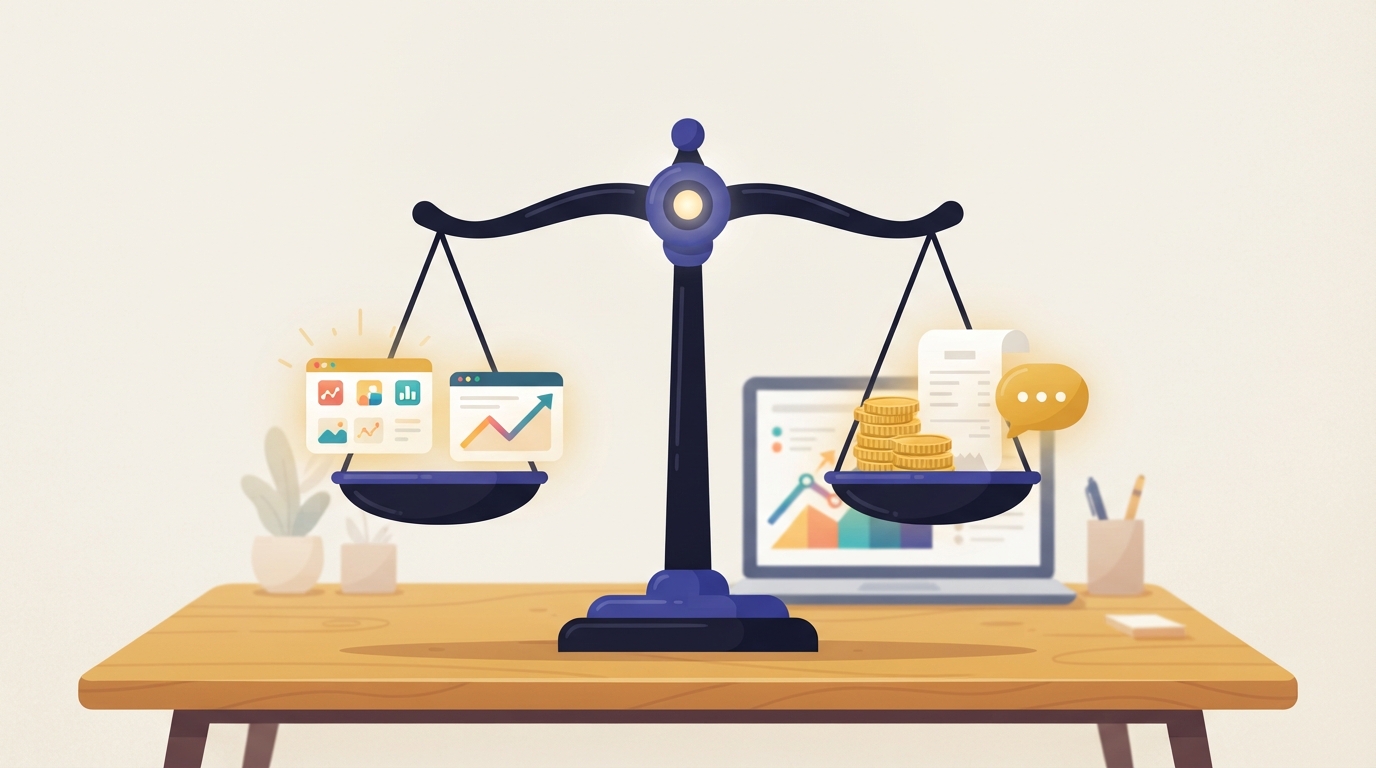
Quick answer: what does AI digital marketing look like in India in 2026?
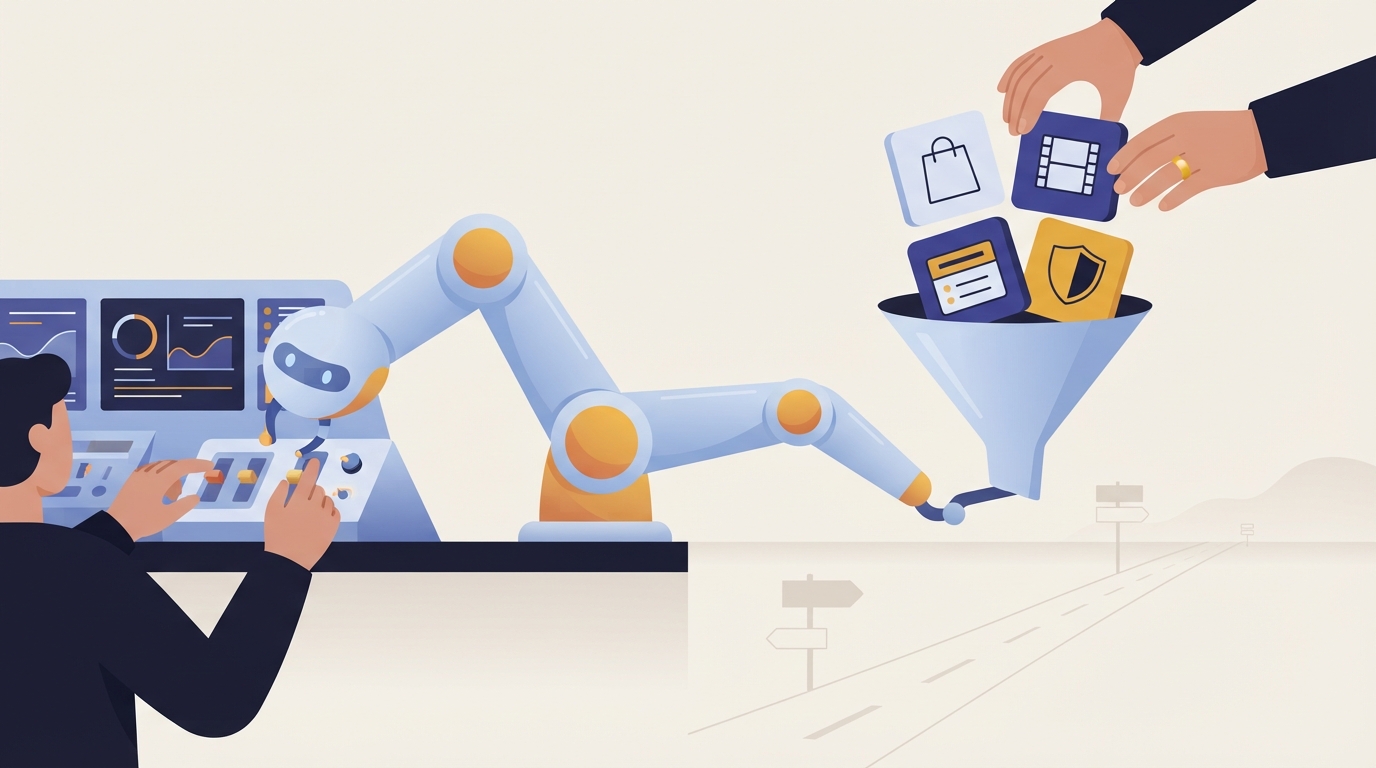
AI digital marketing in India now has two layers. The first is the AI built into Meta and Google, which comes with your media spend. The second is the paid tools you add on top. Most Indian marketers use AI, but scattered data limits results. The real cost includes 18% GST, TDS, WhatsApp per-message fees and subscriptions.
AI adoption in Indian marketing is high, but most of it is still shallow
Most Indian marketers now use AI, but only about half have built it into how they actually work. The rest are still trying standalone tools, and scattered data holds back their results.
The Salesforce State of Marketing report found that 81% of marketers in India have adopted AI. It names siloed systems and poor data quality as the main barriers. The MMA-EY study puts full-stack AI integration at about 54%, with 46% still testing standalone tools.
Search behaviour is shifting quickly too. India had 19% of the global user base of leading AI assistant apps in 2025, against 10% for the US, according to the MMA-EY study as reported by Social Samosa. In the Salesforce survey, 92% of Indian marketers have started optimising content for AI answers such as ChatGPT and Google AI Overviews.
How much weight each India AI statistic deserves
Ranking pages quote these numbers side by side as if they were equally reliable. They are not. Here is how we rate the sources you will see most often.
| Source | Sample and date | Good for | Caveat |
|---|---|---|---|
| Salesforce State of Marketing (India) | 250 Indian marketers within 4,450 globally, Oct-Nov 2025 | Adoption levels and data barriers | Double-anonymous survey, but the India sample is small |
| MMA-EY study | Indian marketers; seen only via trade-press reports | Maturity and priorities: content 79%, media mix modelling 70% | Read the method before quoting |
| Adobe India study | Brands and consumers, Jan 2025 | Generative AI use (66% of brands) and attitudes to transparency | Nearly 2 years old |
| Cloud 9 Digital survey | 523 businesses, Q4 2025 | Which tools teams use | Agency self-survey, likely tilted towards small businesses |
| "Survey of 500 Indian D2C brands" | No publisher or method named | Nothing | Do not quote it |
The AI you already pay for sits inside Meta and Google
For a ₹10 lakh+ account, the AI that moves CAC (customer acquisition cost) the most is already inside Meta and Google. It costs nothing beyond your media spend. What it does need is good conversion data.
Google AI Max for Search
AI Max is an optimisation layer you switch on inside an existing Search campaign. It is not a new campaign type. It adds three things: search-term matching (broad match and keywordless), automatic headline and description customisation, and final URL expansion.
It also gives you controls that Performance Max lacks. These include brand inclusions and exclusions, ad-group-level location-of-interest targeting, and a report that shows the search term, headline and landing page together.
AI Max relies on Maximize Conversions or Maximize Conversion Value. On Manual CPC (cost per click) it cannot run its advanced optimisations, so change your bidding strategy first.
Google's own 2025 data says advertisers typically see 14% more conversions or conversion value at a similar CPA (cost per acquisition) or ROAS (return on ad spend). That figure comes from non-retail advertisers, so D2C brands should test it rather than assume it. Eligible accounts can run a 1-click 50/50 experiment against the base campaign. Google has since extended AI Max to Shopping.
Meta Advantage+
Inside Advantage+ campaigns, Meta's AI handles targeting, placements and creative variations. The setup changes often, so use our guide to Meta Advantage+ campaigns for sales and leads for the current details.
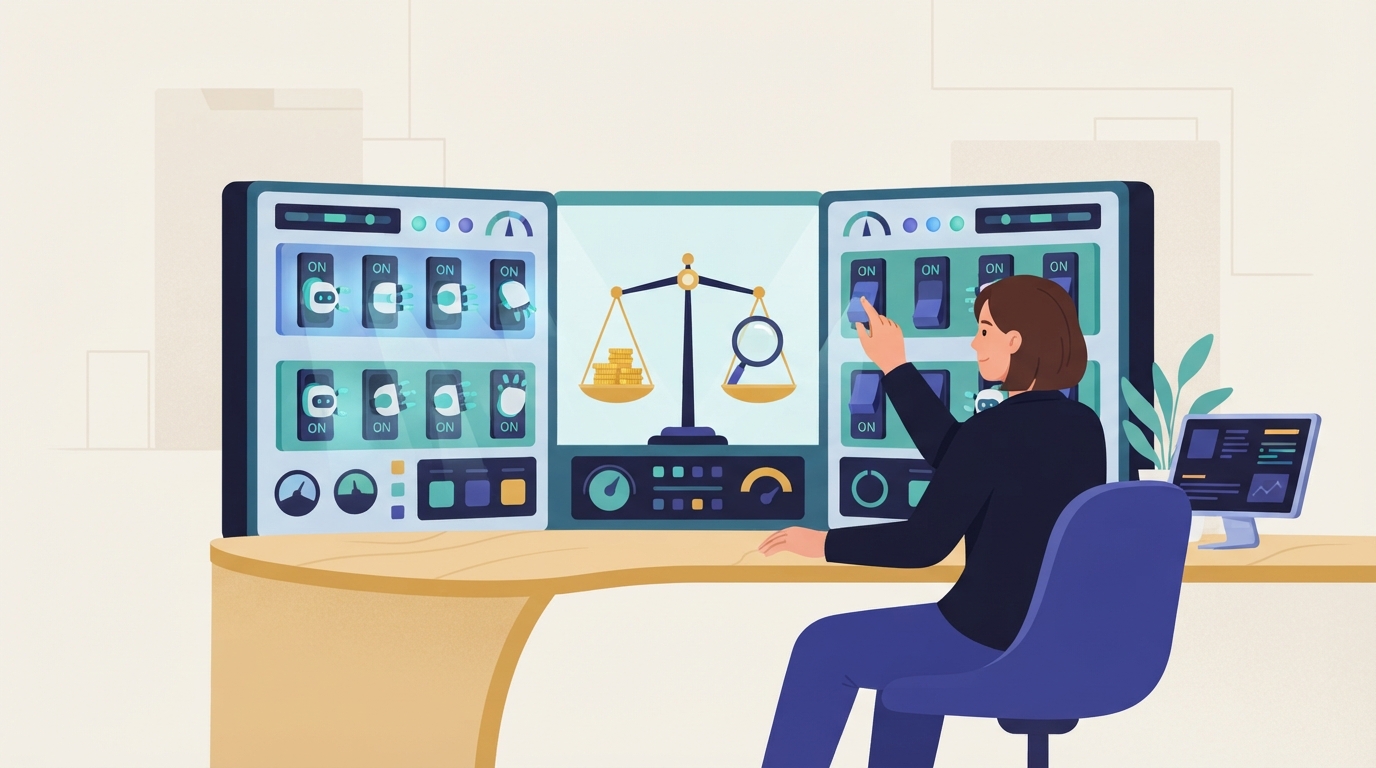
Our rule of thumb: test every platform AI feature against your current setup for at least 2-3 weeks. Judge it on profit after product cost, shipping, tax and returns, not on platform ROAS.
The real rupee cost: GST, TDS, WhatsApp fees and tools
The all-in cost of AI marketing in India is media spend, plus 18% GST, plus TDS (tax deducted at source) compliance, plus WhatsApp per-message fees and tool subscriptions. Tax commentary says the equalisation levy is no longer part of that list, but confirm this with your CA.
GST and TDS on Meta India accounts
If your ad account's business country is India, Facebook India sells you the ads. It bills in rupees and adds GST and TDS to every charge. Adding a GSTIN (GST identification number) is optional, but without it you cannot claim input tax credit.
TDS is a cash-flow and compliance task. The amount Meta charges includes TDS, but you still have to deposit it with the government. On monthly invoicing, GST and TDS sit on top of your charges, so a bill can go past your credit limit. You must also send Meta the TDS certificate.
Reverse charge, where you self-assess 18% IGST, applies only when a foreign entity bills you. It does not apply to Meta accounts billed in India.
The equalisation levy is gone
According to a tax-payments provider, the 6% levy on online ads bought from foreign platforms was withdrawn for transactions from 1 April 2025. The separate 2% e-commerce levy ended earlier, on 1 August 2024. At least one 2026 tax blog still applies the 6% levy, so ask your CA to confirm against the Finance Act before you remove a 6% line from an older finance model.
WhatsApp per-message fees
Since 1 July 2025, WhatsApp has billed per delivered message instead of per conversation. BSPs report that Indian accounts have been billed in rupees since 1 January 2026. BSP-published copies of Meta's India rate card list ₹0.8631 per marketing message and ₹0.115 per utility or authentication message. We could not confirm these rates on Meta's own pricing page. BSPs also report that marketing messages get no volume discount. With 18% GST alone the rate becomes about ₹1.02. BSP (business solution provider) fees vary, and one industry estimate puts the all-in cost at about ₹1.12-1.29 per marketing message.
Several BSPs report that from 1 October 2026, replies inside the 24-hour service window are charged at the utility rate after 1,000 free per business phone number per month. They also report that utility templates sent inside the window are no longer free. We could not confirm this on Meta's own pricing page, so check it there before you budget for support conversations.
Putting the costs together for one account
Tool subscriptions are the smallest line. One Indian course provider (Alkemy) puts typical paid tools such as Semrush, Jasper and Madgicx at ₹800-8,000 a month each. Check current vendor pricing, because higher tiers can cost more. The tax and messaging lines are much larger.
Worked example: a brand spending ₹25 lakh a month on Meta India
Step 1: Add GST to media spend
Example: ₹25,00,000 of media at 18% GST adds ₹4,50,000. With a GSTIN on the account, you can claim this back as input tax credit, subject to the usual GST conditions.
Step 2: Add WhatsApp and tools
Say the brand sends 2,00,000 marketing messages a month at an all-in ₹1.12-1.29 each. That costs ₹2,24,000-2,58,000. Assume ₹40,000 a month across AI tools. 20,000 COD confirmation messages sent as utility templates add about ₹2,300 at the BSP-listed rate, before BSP fees.
Step 3: Total the monthly cash out
Leaving out the small utility cost, here is the monthly cash that leaves the account.
All-in monthly cash out
₹25,00,000 media + ₹4,50,000 GST + ₹2,24,000 to ₹2,58,000 WhatsApp + ₹40,000 tools = ₹32,14,000 to ₹32,48,000. After claiming ₹4,50,000 input tax credit on media, the net cost is ₹27,64,000 to ₹27,98,000. GST on WhatsApp, BSP and tool invoices may also be claimable, which would lower this further.Put the net figure into your break-even ROAS calculation, not the media figure alone. During Diwali, Ramadan or BFCM (Black Friday and Cyber Monday), auction costs usually rise while WhatsApp rates stay fixed. That makes owned-channel sends relatively cheaper in peak weeks.
What to buy and what to leave to the platforms
Leave bidding, targeting and placement to platform AI. Pay only for the jobs the platforms do not do well: creative production, WhatsApp and email or SMS flows, and profit-level analytics.
Use this fixed order of checks before you sign up for any new AI tool.
- Billing is clean: the GSTIN is on the account and the TDS workflow is set up.
- Conversions API and offline or CRM conversions are live and matching.
- COD-confirmed and RTO outcomes are fed back to the platforms.
- Platform AI has been tested: an AI Max experiment and an Advantage+ test, both judged on profit.
- Only then, buy tools for the gaps that are left: creative generation, a WhatsApp BSP, email or SMS, analytics or MMM (media mix modelling).
Our threshold: keep paid AI tools, not counting messaging fees, under 2% of media spend until one of them proves it adds profit. Cut any tool that has not paid back its all-in cost within 60 days.
On tool choice, an agency survey found ChatGPT used by 67% of Indian businesses, Gemini by 52%, Claude by 38% and Canva AI by 29%. Treat these figures as a rough guide only. For regional-language ads in Hindi, Tamil or Marathi, AI translation is a first draft. A native speaker should review hooks and claims before you spend on them.
Data readiness decides the return, not the tool
AI bids and personalises on whatever data you give it. If that data counts placed orders instead of delivered ones, AI scales the wrong customers faster.
Salesforce's India findings show that teams with unified data are 1.4x more likely to respond to customers regularly and 1.6x more likely to use AI agents. 83% of Indian marketers also say they need more personalised content than they can produce. Clean data is what makes that content worth producing.
Checklist before you expect AI to cut CAC
- Pixel plus Conversions API (CAPI) running server-side. See our Meta Pixel and Conversions API setup guide.
- Lead and call outcomes uploaded from your CRM as offline conversions.
- Value signals that reflect margin, not only order count.
- COD (cash on delivery) orders counted once confirmed, and RTO (return to origin, meaning refused or undelivered parcels) fed back. This matters most in India and the Gulf.
- Payment-step events tracked, so a failed UPI payment is not mistaken for weak intent.
- WhatsApp opt-ins captured. COD confirmations as utility messages cost about ₹0.115 on BSP-published copies of Meta's rate card and help reduce RTO.
Before ScaleWin's assistant recommends a change, it compares landing-page views with link clicks. A large gap there is a page or tracking problem, and no bidding AI can fix it.
Selling outside India changes the cost maths
If you sell abroad, WhatsApp and tax costs change by market. WhatsApp sets the price by the recipient's country code, not by where your business is based.
In 2026, BSP-published rate cards put a US marketing message at roughly 2x the India rate of about ₹0.86. The same third-party rate cards put Germany at over 10x the India rate and the UAE far higher, so check Meta's own pricing page before you budget. A WhatsApp-heavy retention plan that pays back in India may not pay back in the Gulf or Europe.
Tax rules on ad spend differ too. Meta's Help Center says that in Australia, GST is added to accounts billed by Facebook Australia whether or not your business is GST-registered. Check the current page before budgeting. For VAT in the UK, EU and Gulf, or sales tax in the US, check Meta's and Google's tax pages for your billing country before you build a budget.
COD and RTO are mainly an issue in India, the Gulf and parts of South-East Asia. In card-first markets, returns and chargebacks matter more than refused deliveries.
What most guides get wrong about AI marketing in India
Most India guides repeat old tax and pricing facts and treat AI as a list of tools. Here are the errors we see most often.
- "Meta invoices show no GST, so use reverse charge." This is wrong for India-country accounts. Facebook India has added GST and TDS to each charge since October 2018.
- "The equalisation levy ended in August 2024." That date ended the 2% e-commerce levy. Tax commentary says the 6% levy on online ads ended on 1 April 2025, so check with your CA.
- "1,000 free WhatsApp conversations." That conversation tier is gone. Billing has been per message since July 2025 and, according to BSPs, in rupees since January 2026. BSPs report a different allowance from 1 October 2026: 1,000 free service replies per business number per month.
- "Google's search AI means Performance Max." AI Max now works inside standard Search campaigns and gives you more control.
- Unsourced statistics and dated ChatGPT model names still appear on ranking pages. Check current plans and India pricing on OpenAI before quoting them.
Transparency matters too. 95% of Indian consumers and 98% of marketers in Adobe's study said transparency about AI use and sources is the most important consideration. Write down where AI drafts your claims and reviews.
For the wider picture, read our complete guide to AI digital marketing in 2026. To turn this into a plan, use the 90-day AI marketing plan for D2C brands.
Read next in this series
- 7 AI Digital Marketing Mistakes That Quietly Waste Ad Spend in 2026
- AI in Digital Marketing: The Complete Guide for 2026
- How AI Is Changing Digital Marketing (12 Real Examples)
- AI Digital Marketing for Brand Teams: Where to Start at Scale
- AI and Digital Marketing Jobs: What Changes for Marketers
- AI Digital Marketing Strategy: A 90-Day Plan for D2C Brands
- Pros and Cons of AI in Digital Marketing
- AI Digital Marketing for Lean Teams Spending ₹10-20 Lakh a Month
- Future of AI in Digital Marketing: 2026-2030 Trends
Key takeaways
- 81% of Indian marketers have adopted AI (Salesforce), but about 46% are still testing standalone tools (MMA-EY).
- Platform AI such as Google AI Max and Meta Advantage+ costs nothing beyond media. What it needs is clean conversion data.
- Meta India adds GST and TDS to every charge. Add your GSTIN to claim input tax credit. Tax commentary says the 6% equalisation levy ended on 1 April 2025. Confirm this with your CA.
- BSP-published copies of Meta's India rate card list ₹0.8631 per WhatsApp marketing message and ₹0.115 per utility message. One industry estimate puts the all-in cost at about ₹1.12-1.29 once BSP fees and GST are added.
- Fix tracking and feed COD and RTO outcomes back to the platforms before you buy another tool.
Ai digital marketing: frequently asked questions
How many Indian companies use AI in marketing in 2026?
Is GST charged on Facebook and Instagram ads in India, and can I claim input tax credit?
Is the 6% equalisation levy still applicable on ads in India?
How much does a WhatsApp marketing message cost in India in 2026?
What is Google AI Max and should Indian advertisers turn it on?
Does AI Max work with Manual CPC bidding?
How does AI handle COD orders and RTO for Indian D2C brands?
Sources
- Salesforce State of Marketing India findings (Social Samosa)
- Salesforce report method and data findings (CIOL)
- MMA-EY study on AI adoption among Indian marketers
- Adobe India generative AI study
- Meta Business Help Center: GST for advertisers in India
- Meta Business Help Center: GST in Australia
- Google Ads Help: About AI Max for Search campaigns
- Google Ads Help: AI Max FAQ
- Equalisation levy withdrawal (Xflow)
- WhatsApp marketing cost in India 2026 (CodingClave)
- WhatsApp marketing message pricing by country (Blueticks)

Ajay is the founder of ScaleWin. He works hands-on with Meta Ads, Google Ads and SEO for Indian D2C and service brands, and built ScaleWin so that the daily work of a performance marketer - reading numbers, pausing losers, scaling winners - happens automatically.
Drafted with AI assistance. How these articles are written
Let ScaleWin read your ad data every day
ScaleWin checks your Meta and Google Ads daily, judges every ad on profit and tells you exactly what to change.
Start free, no card