Ajay Kumar
Quick answer: which ad metrics matter most?
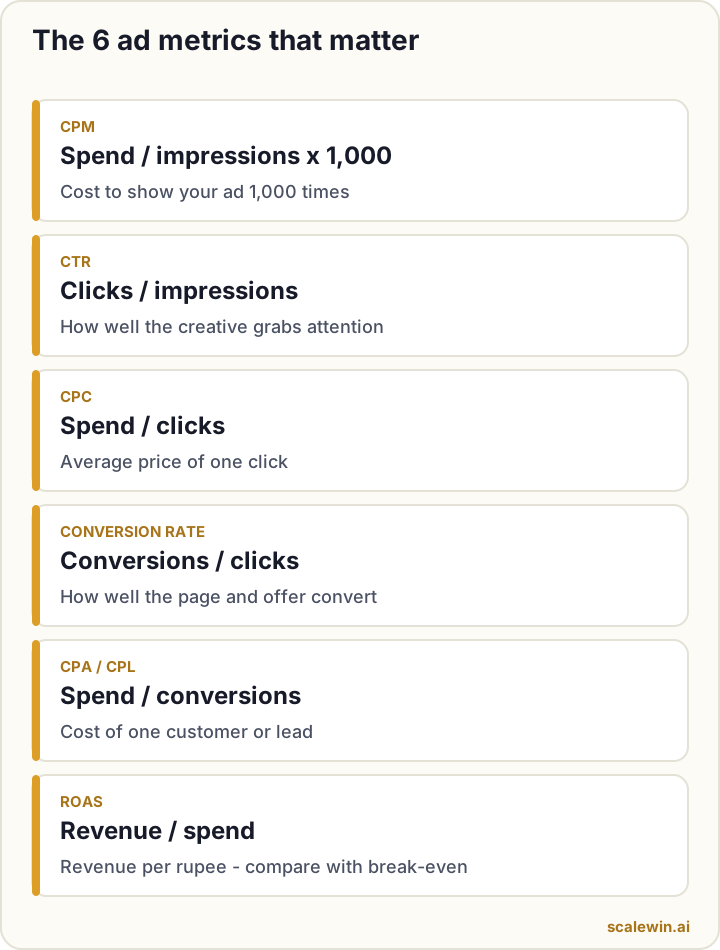
CPC = spend ÷ clicks. CPM = spend ÷ impressions × 1,000. CTR = clicks ÷ impressions. Conversion rate = conversions ÷ clicks. CPA = spend ÷ conversions. ROAS = revenue ÷ spend. CTR and CPM tell you how your ads perform; CPA and ROAS compared with your break-even tell you whether you are making money.
Open Meta Ads Manager or Google Ads and you are hit with a wall of abbreviations: CPC, CPM, CTR, CVR, CPA, ROAS. Each one tells you something different - and looking at the wrong one is how many brands make bad decisions with good intentions, even at lakhs a month in spend.
This guide explains every important metric in plain language, gives you the formula, and shows how they connect so you can find exactly where a campaign is leaking money.
CPM: cost per thousand impressions
CPM formula
CPM = (Spend ÷ Impressions) × 1,000CPM is what you pay for your ad to be shown 1,000 times. It reflects competition in the auction - CPMs usually rise during festive and peak seasons like Diwali, Black Friday or Christmas, when more brands advertise. On Meta, a poorly-engaging ad can also raise your CPM.
CTR: click-through rate
CTR formula
CTR = Clicks ÷ Impressions × 100CTR shows how many people who saw your ad clicked it. It is your best signal of creative and message quality. On Meta, look at link CTR rather than "CTR (all)", which also counts likes and profile clicks.
CPC: cost per click
CPC formula
CPC = Spend ÷ ClicksCPC is the average price of one click. On Google Search it depends on keyword competition and ad quality. On Meta it is mostly the result of CPM and CTR - a better CTR lowers your CPC even if CPM stays the same.
Conversion rate (CVR)
Conversion rate formula
CVR = Conversions ÷ Clicks × 100Conversion rate tells you what share of clicks became a sale or lead. If CTR is healthy but conversion rate is low, the problem is usually after the click - slow page, unclear price, weak offer or a confusing checkout.
CPA / CPL: cost per acquisition or lead
How to calculate and read CPA
CPA formula
CPA = Spend ÷ ConversionsWhat CPA tells you
CPA is what you pay to get one customer (or CPL for one lead).
Worked example: CPA against a ₹400 break-even
This is the number to compare with your break-even: if one customer brings ₹400 of profit before ads, a CPA above ₹400 loses money.
ROAS: return on ad spend
ROAS formula
ROAS = Revenue from ads ÷ Ad spendA 3x ROAS means ₹3 of revenue for every ₹1 spent. But revenue is not profit - read why a 3x ROAS can still lose money and work out your break-even ROAS before you celebrate.
How the metrics connect: the diagnosis chain
The metrics are links in one chain. When results are bad, walk down the chain and find the weakest link:
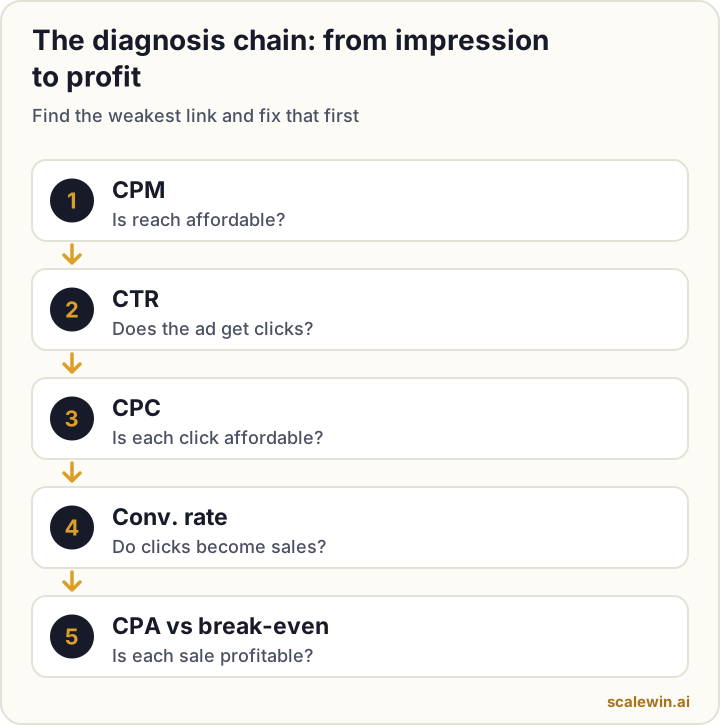
| If this looks bad... | The problem is probably... | Fix |
|---|---|---|
| High CPM | Competition, narrow audience or low-engagement ads | Broaden audience, refresh creative |
| Low CTR | Creative or message | New hooks, angles and formats |
| High CPC (Search) | Competitive keywords or low Quality Score | Tighter ad-keyword relevance, better landing page |
| Low conversion rate | Landing page, price or offer | Faster page, clearer offer, simpler checkout |
| High CPA | Any of the above | Fix the weakest link first |
Ad metrics calculator
Enter your campaign numbers to calculate every metric at once. The example figures are a ₹10 lakh month. It runs in your browser - nothing is saved.
Other metrics worth knowing
Frequency (Meta)
Average number of times each person saw your ad. Rising frequency with falling CTR is the classic sign of creative fatigue.
Impression share (Google)
The share of eligible searches where your ad actually showed. Low impression share lost to budget means you could get more conversions with more budget; lost to rank means you need better ads or bids.
AOV (average order value)
Revenue ÷ orders. Raising AOV with bundles or upsells lets you afford a higher CPA.
Vanity metrics to stop worrying about
Likes, reach, followers and "CTR (all)" feel good but rarely predict sales. For a sales budget, judge campaigns by CPA and ROAS against break-even.
A simple weekly routine
Every Monday: check spend and CPA by campaign, then walk the chain (CPM → CTR → CVR) for anything above break-even, and fix one link at a time.
Key takeaways
- CPC, CPM and CTR describe ad delivery and creative quality.
- Conversion rate describes your landing page and offer.
- CPA and ROAS - compared with your break-even - decide profit.
- Use the metrics as a chain: CPM → CTR → CPC → conversion rate → CPA → ROAS.
- Fix the weakest link in the chain instead of guessing.
PPC metrics: frequently asked questions
What is a good CTR for ads?
What is the difference between CPC and CPM?
What is the difference between CPA and CPL?
Is a higher ROAS always better?
Which metric should I check every day?

Ajay is the founder of ScaleWin. He works hands-on with Meta Ads, Google Ads and SEO for Indian D2C and service brands, and built ScaleWin so that the daily work of a performance marketer - reading numbers, pausing losers, scaling winners - happens automatically.
Drafted with AI assistance. How these articles are written
Get these numbers explained every morning
ScaleWin tracks every metric across Meta and Google and sends you a plain-language WhatsApp summary each day.
Start your 3-day free trial